
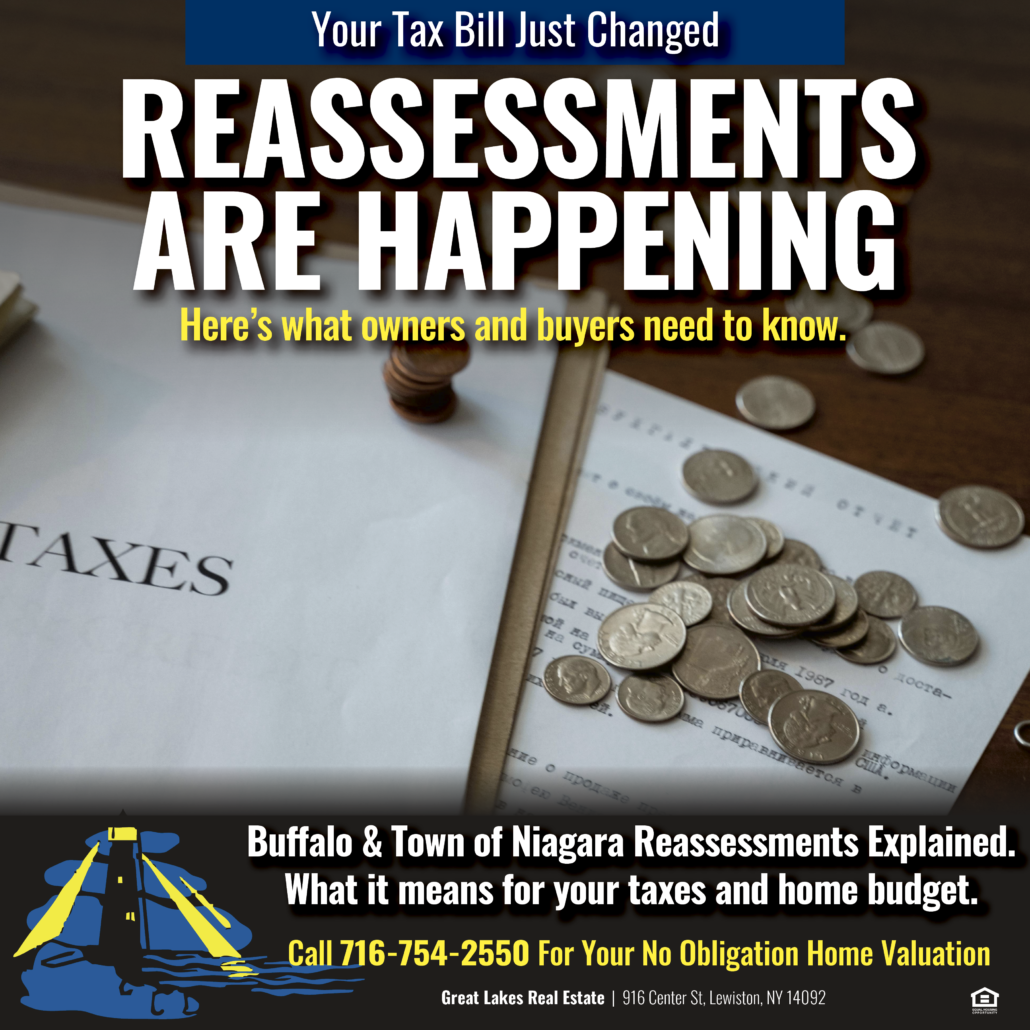
What Property Tax Reassessments Are — And Why Western New York Homeowners & Buyers Should Care
Property taxes are a reality of homeownership, but every few years many homeowners notice a bigger shift in their tax bill than expected. That’s often because of a property tax reassessment — and several communities in Erie County and Niagara County have recently been involved in reassessment activity.
Understanding what a reassessment is, how it works, and how it can affect your tax bill — whether you’re selling, buying, or simply planning ahead — can help you avoid surprises and make smarter decisions.
What a Reassessment Really Is
A property tax reassessment is a process local governments use to update the assessed value of properties so that property taxes more accurately reflect current market values.
Here’s how it works:
- Assessors review property values based on recent market activity, condition, size, and other factors.
- They compare current market values to previously assessed values.
- If values have changed significantly, the assessor updates the assessed value.
- The tax bill — which is based on the assessed value and tax rates — is adjusted accordingly.
The goal isn’t to raise taxes automatically, but to ensure fairness: properties that have increased in value aren’t under-assessed compared to similar homes. However, reassessments can result in higher tax bills if property values rise faster than the tax rate or exemptions.
Reassessment Activity in Western New York
City of Buffalo Reassessment (2026 Assessment Roll)
In the City of Buffalo, a 2026 annual reassessment has been completed, with new values being used to calculate property taxes for mid-2026 and early 2027. Homeowners in many Buffalo neighborhoods have seen preliminary assessment changes that may result in a higher tax bill — unless they go through review or appeal processes.
This effort is part of the City’s regular assessment process aimed at keeping values aligned with current market conditions, but it’s also created concern among some property owners who are seeing significant increases.
Town of Niagara Reassessment (Long-Term Update)
The Town of Niagara has been undergoing a reassessment project after decades without one. Because properties hadn’t been updated in many years, this reassessment attempts to bring assessments closer to current market value across the community.
That type of multi-decade reassessment can result in larger shifts in assessed values compared to annual or cyclical updates.
Why Reassessments Affect Homeowners
A reassessment doesn’t automatically mean higher taxes — but it can lead to higher bills in several ways:
1. Assessed value goes up
If your home’s assessed value increases more than the tax rate is lowered, your total tax bill may rise.
2. Tax rate changes don’t offset value changes
Even when a county tax rate is lowered — as in Erie County’s latest budget where the rate was reduced from $3.29 to $3.09 per $1,000 assessed value — significant increases in assessment value can still lead to higher bills for property owners.
3. School, town, and other district levies vary
Your total tax bill isn’t determined solely by county taxes — school districts, libraries, and other local entities also levy taxes based on assessed value.
What Reassessments Mean for Buyers
If you’re buying a home in Western New York, reassessments matter too:
- Expectations vs. Reality: Just because the purchase price stays the same doesn’t mean your tax bill will stay the same year to year.
- Budgeting: Higher assessed values may affect your monthly payment estimates and long-term affordability.
- Market Context: Areas with recent reassessments might reflect stronger market performance — but also potentially higher tax costs.
- Negotiation Insight: Understanding assessment trends can help you anticipate cost changes and negotiate effectively.
What Property Owners Can Do
1. Review Your Assessment Notice
Assessments are based on information about your property and comparable sales. If data is incorrect or out of date, it can be challenged.
2. File for an Informal Review
Many municipalities allow you to meet with an assessor to review your assessment before formal deadlines.
3. Grievance Process
If informal review doesn’t resolve your concern, you can file a formal grievance — often in May after the tentative assessment roll is posted.
4. Consult Local Advisors
Assessment professionals and real estate agents can help you understand how changes may affect your long-term plan.
Bottom Line
Property tax reassessments are a normal part of how local governments keep assessments in line with changing market conditions — but they can affect what you pay in school, county, and municipal taxes. In the City of Buffalo and Town of Niagara, recent reassessment activity highlights how values can shift after years without review.
Whether you’re a current homeowner or planning to buy in Erie County, Niagara County, or elsewhere in Western New York, understanding reassessments helps you:
- plan your budget wisely
- anticipate tax liability changes
- make informed decisions about offers and negotiations
If you have questions about how assessments might impact your home or a property you’re considering buying, the team at Great Lakes Real Estate can help you navigate the local context with clarity.
Call (716) 754-2550 to talk through how property taxes may factor into your next move.

