
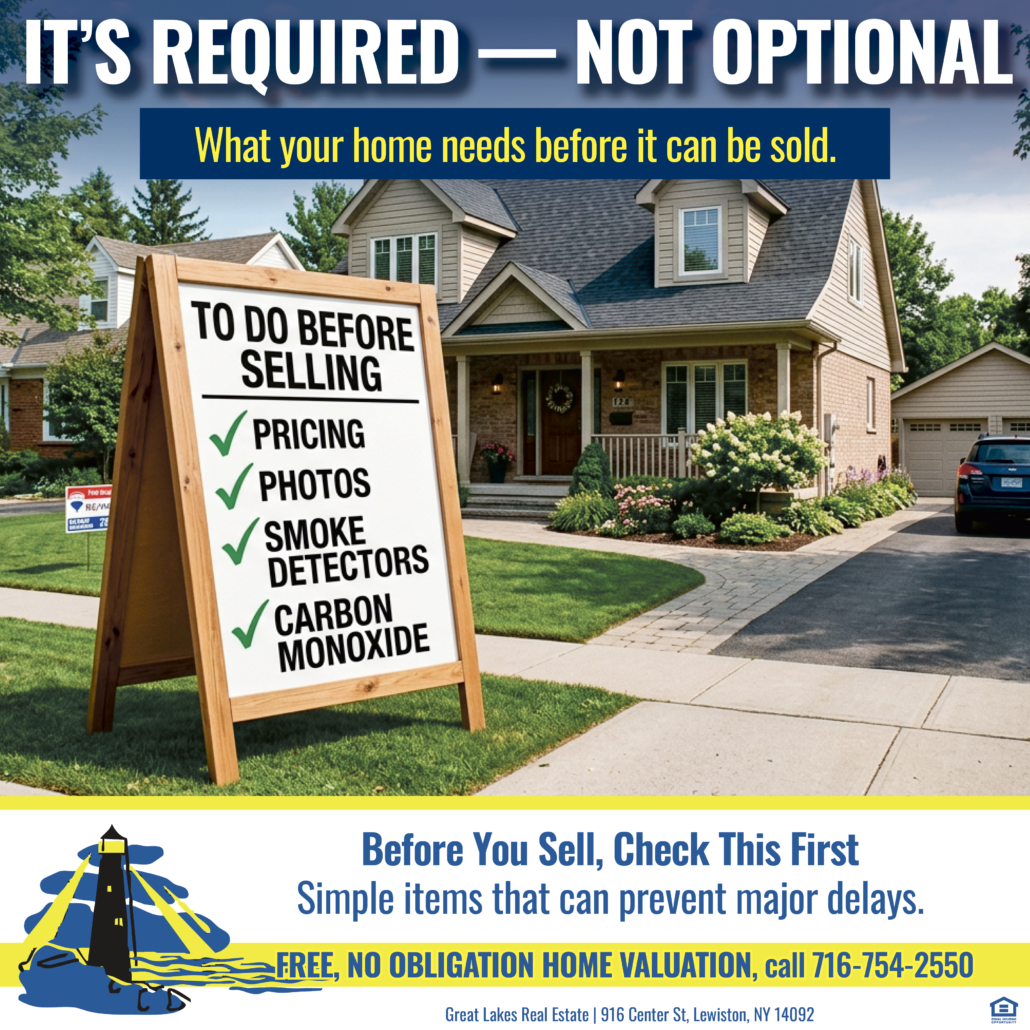
Selling Your Home? Don’t Overlook These Required Safety Updates
When most homeowners think about selling, the focus tends to be on pricing, presentation, and timing the market. Those are all important factors, but they are not the only ones that determine how smoothly a sale moves forward.
There are also specific safety and compliance requirements that must be met before a property can legally transfer ownership. These details are often overlooked until late in the process, when they can create unnecessary delays or last-minute stress.
Across Western New York, these requirements come up more often than many sellers expect. Taking care of them early can make a meaningful difference once your home is under contract.
Why These Requirements Matter
Certain safety items are not optional when selling a home. They are part of the legal and procedural steps tied to closing, and they are often verified by attorneys, lenders, or municipalities before a transaction can be completed.
When these items are missing or not up to standard, the process can slow down quickly. What seems like a small oversight can turn into a last-minute scramble, especially as deadlines approach.
Understanding what’s expected ahead of time helps keep everything moving forward without interruption.
Smoke Detectors: More Than a Basic Requirement
Smoke detectors are required in residential properties, but it’s not just about having them installed. They must be placed correctly and fully functional.
Most homes will need working detectors on each level and near sleeping areas. Buyers, attorneys, and inspectors often verify this before closing, and it’s one of the first things that can be flagged if overlooked.
Because smoke detectors are so common, they’re easy to take for granted. But in a real estate transaction, they’re treated as a necessary part of the process.
Carbon Monoxide Detectors: A Frequent Oversight
Carbon monoxide detectors are just as important, and they are one of the most commonly missed items during a sale.
In homes with fuel-burning appliances, fireplaces, or attached garages, detectors must be properly installed and operational. Their placement also matters, particularly in relation to sleeping areas.
Unlike smoke detectors, these are not always as visible, which is why they’re often forgotten until the final stages of a transaction.
Local Requirements Sellers Shouldn’t Overlook
Beyond smoke and carbon monoxide detectors, some municipalities in Western New York have introduced additional requirements that can directly impact a sale. One of the most important examples right now is in the Town of Amherst.
In many cases, sellers are required to complete a time-of-sale sewer inspection before closing. The property must receive a certificate confirming that the sewer and drainage systems meet current standards. If issues are found, they typically need to be addressed before ownership can transfer.
This is where many sellers are caught off guard.
The focus isn’t just on whether the system works — it’s on how it’s connected. Amherst has been enforcing rules that prohibit stormwater from entering the sanitary sewer system. That means things like sump pumps, downspouts, and drain tiles cannot be tied into the sewer line.
If they are, they must be properly disconnected and redirected.
For some homes, especially older properties, correcting these issues can involve additional work and expense. And because this requirement often comes up during inspections or final review, it can create delays if it hasn’t been addressed early.
The key takeaway is simple: requirements can vary by municipality, and they’re not always top of mind when preparing to sell. Taking the time to understand local expectations — especially in areas like Amherst — can help prevent last-minute surprises and keep your closing on track.
Why These Issues Often Come Up Late
In many cases, these requirements don’t become part of the conversation until the transaction is already underway. Attorneys begin reviewing documents, buyers complete inspections, and municipalities may step in to verify compliance.
By that point, timelines are tighter and expectations are higher.
Handling these items before listing helps avoid that pressure. It allows the transaction to move forward without interruption and gives both buyers and sellers more confidence in the process.
The Bottom Line
Selling a home involves more than preparing it for showings or finding the right buyer. There are specific requirements that must be met before a closing can take place, and overlooking them can slow things down at the worst possible time.
Across Erie County, Niagara County, and the surrounding Western New York communities, being prepared on the front end makes the entire process smoother.
At Great Lakes Real Estate, we help sellers stay ahead of these details so nothing gets in the way once a deal is in motion. Call (716) 754-2550. Let’s make sure your home is ready from day one.

