
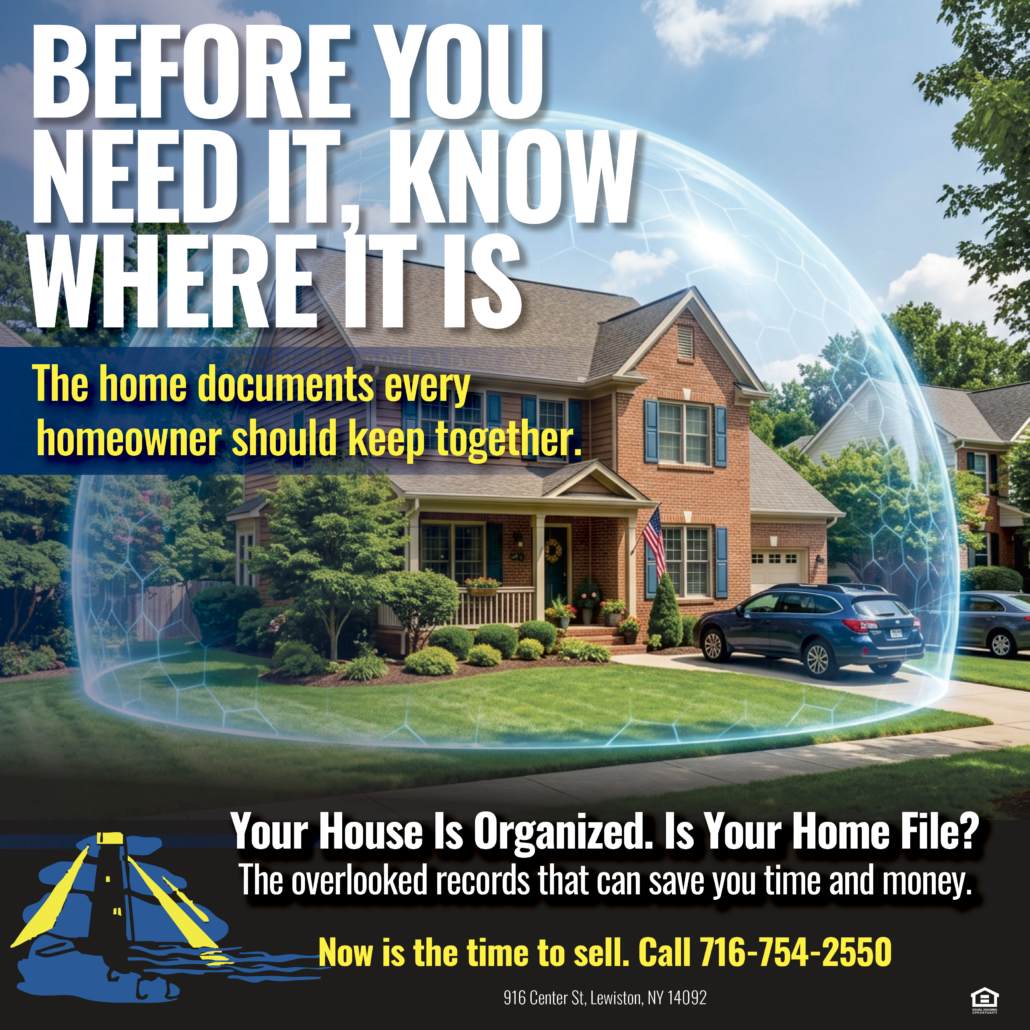
Your Home Has a Paper Trail. Do You Know What’s In It?
Why understanding your home’s paperwork can save you time, money, and headaches.
Earlier this week, we talked about deed theft and how criminals sometimes target the paperwork behind a home instead of the home itself. While deed theft is fortunately uncommon, it highlights something many homeowners rarely think about.
A home isn’t just a building.
It’s also a collection of legal documents, permits, surveys, warranties, tax records, and public filings that tell the story of your property.
Most homeowners spend years maintaining their roof, servicing the furnace, mowing the lawn, and updating the kitchen. Very few spend the same amount of time organizing or even understanding the paperwork that goes along with their home.
That paperwork may sit quietly in a drawer for years.
Then one day, it’s exactly what you need.
Whether you’re refinancing, selling, completing a renovation, filing an insurance claim, or simply answering a question about your property, having the right documents readily available can save an incredible amount of time and frustration.
Your Deed Is Only the Beginning
When people hear the phrase “property records,” they often think only about the deed.
While the deed establishes ownership, it’s just one piece of your home’s history.
Over the years, your property accumulates a file of important documents that may include surveys, title insurance policies, permits, mortgage paperwork, utility information, warranties, tax records, and records of major improvements.
Each document serves a different purpose, and together they create the legal and historical record of your home.
Many homeowners don’t realize how valuable those records are until they’re asked to produce them.
Renovations Leave More Than New Countertops
Think back over the years.
Did you finish the basement?
Replace the roof?
Install a new furnace?
Build a deck?
Add a shed?
Upgrade the electrical service?
Every improvement tells part of your home’s story.
Keeping receipts, contractor information, permits, and warranty documents doesn’t just help with maintenance. It can also answer buyer questions, simplify insurance claims, and demonstrate that improvements were completed properly.
Years from now, you’ll probably remember the project.
You may not remember the contractor’s name or where you filed the paperwork.
Surveys Can Answer Questions Before They Become Problems
One document homeowners frequently overlook is the property survey.
Many people have one from when they purchased the home, but it often gets tucked away and forgotten.
A survey can help clarify property boundaries, easements, fence locations, setback requirements, and other details that may become important if you’re building an addition, installing a fence, or preparing to sell.
Finding it after you’ve already started a project isn’t nearly as helpful as knowing where it is beforehand.
Small Records Can Solve Big Problems
Not every important document is exciting.
Sometimes the paperwork that saves the day is surprisingly ordinary.
The warranty for a replacement water heater.
The serial number for a furnace.
The invoice showing when the roof was replaced.
The paperwork confirming a septic inspection or sewer repair.
The owner’s manual for an irrigation system.
These aren’t things most homeowners think about every day.
But when a buyer asks a question, an appliance needs service, or an insurance company requests documentation, those small records suddenly become incredibly valuable.
Today’s Buyers Ask More Questions
The return of home inspections and the growing emphasis on disclosures have changed the types of questions buyers ask.
They’re interested in the age of the roof.
The condition of major systems.
Whether improvements were permitted.
When windows were replaced.
Whether warranties are transferable.
Having organized records doesn’t just make those conversations easier.
It helps buyers feel more confident about the home they’re considering.
And confidence often leads to stronger offers and smoother transactions.
Create a Home File Before You Need One
The best time to organize your home’s paperwork isn’t when you’re getting ready to move.
It’s while you’re still comfortably living there.
Whether it’s a physical folder, a fireproof safe, or a secure digital folder, keeping important records together makes future decisions much easier.
Even something as simple as creating a checklist of where your most important documents are stored can save hours of searching later.
Like regular home maintenance, organizing your paperwork is one of those tasks that’s easy to postpone.
Until the day you’re glad you didn’t.
How Great Lakes Real Estate Helps Homeowners Prepare
At Great Lakes Real Estate, we believe helping homeowners goes far beyond buying and selling.
Sometimes it’s answering questions before they’re asked.
Sometimes it’s helping sellers prepare months before they plan to list.
And sometimes it’s simply sharing information that helps homeowners better understand and protect one of the largest investments they’ll ever make.
The better prepared you are today, the easier tomorrow’s decisions become.
The Bottom Line
Your home’s value isn’t measured only by its square footage or recent updates.
It’s also reflected in the story behind the property—and the documents that help tell it.
Keeping those records organized may seem like a small task today, but it can make a tremendous difference when it’s time to renovate, refinance, insure, or sell.
At Great Lakes Real Estate, we believe informed homeowners make better decisions, and we’re always here to help you prepare for what’s next.
Call (716) 754-2550
Let’s protect your investment—inside and out.

