
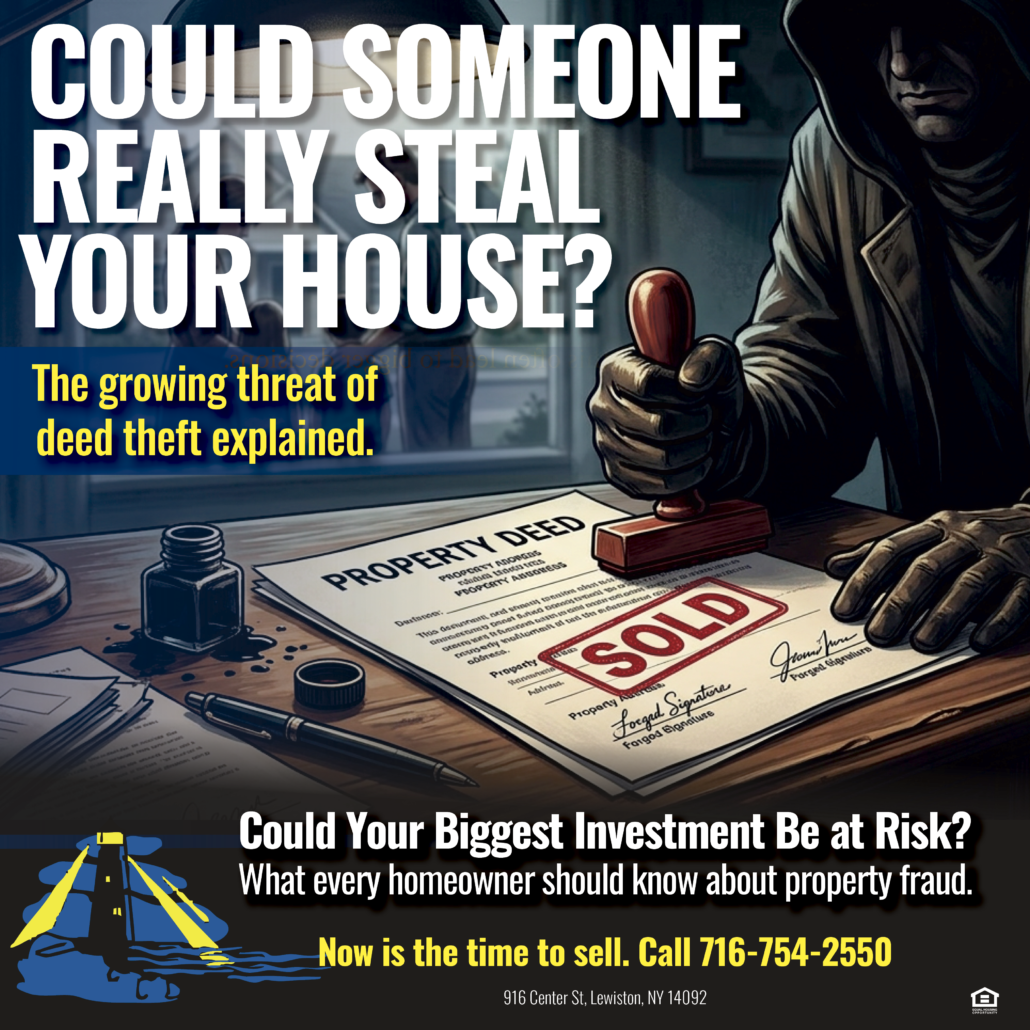
Could Someone Really Steal Your House Without Taking the Keys?

What New York homeowners should know about deed theft and property fraud.
When most people think about someone stealing a home, they picture a break-in, a vacant property, or perhaps a scam targeting an abandoned house.
Very few imagine someone stealing a home with paperwork.
Yet that’s exactly what deed theft is.
Although it remains relatively uncommon, deed theft is a very real form of real estate fraud. It occurs when someone uses forged documents, deception, or other fraudulent means to transfer ownership of a property without the rightful owner’s knowledge or consent. The issue has received growing attention in New York, prompting New York City to establish a dedicated Office of Deed Theft Prevention earlier this year to help educate homeowners, investigate suspicious filings, and support victims.
While the new office serves New York City, the lesson applies to homeowners everywhere—including here in Western New York.
The best defense is understanding how these scams work before they happen.
It Doesn’t Happen the Way Most People Think
Movies often portray criminals picking locks or breaking windows.
Deed theft is much quieter.
Instead of targeting the front door, scammers target the paperwork behind the property. They may forge signatures, create fraudulent documents, impersonate homeowners, or convince someone to sign paperwork they don’t fully understand. In some cases, criminals attempt to transfer ownership outright. In others, they record fraudulent mortgages or liens against a property.
For many victims, the first indication something is wrong comes long after the fraudulent documents have been filed.
Why Longtime Homeowners Can Be Attractive Targets
One reason deed theft has received so much attention is that scammers often look for opportunity rather than randomness.
Longtime homeowners who have built significant equity, elderly homeowners, vacant properties, inherited homes, and owners experiencing financial hardship have historically been among those targeted.
That doesn’t mean every homeowner is at high risk.
It does mean every homeowner should understand that property ownership is protected by more than locks and alarm systems.
It’s also protected by accurate records and careful attention to legal documents.
A Signature Deserves a Second Look
One common theme in many real estate fraud cases is paperwork that wasn’t fully understood.
Homeowners should be cautious anytime someone asks them to:
- add another person to the deed
- transfer ownership as part of a financial arrangement
- sign documents they haven’t had time to review
- respond to high-pressure offers promising to “save” their home or solve financial problems
Legitimate real estate transactions leave room for questions.
Scams usually don’t.
If someone insists that paperwork must be signed immediately or discourages you from speaking with an attorney or trusted family member, that’s a reason to slow down—not speed up.
Most Homeowners Can Take Simple Steps to Protect Themselves
The good news is that preventing deed fraud doesn’t usually require expensive technology.
Experts recommend:
- reviewing your property’s public records periodically
- watching for unexpected notices involving your home
- being cautious about unsolicited offers involving your property
- consulting an attorney or trusted real estate professional before signing documents that affect ownership
Some counties and municipalities also offer free property-record alert programs that notify owners when documents are recorded against their property. If your county provides that service, it’s worth considering.
Like fraud alerts on a credit report, early notification can help identify problems before they become much larger.
Why This Matters Even if You’re Not Selling
Many people assume deed fraud is only a concern when buying or selling a home.
In reality, property ownership is something worth protecting every year you own your home.
For most families, a house represents far more than a place to live.
It’s often their largest financial investment, years of hard-earned equity, and something they hope to pass on to future generations.
Protecting that investment means paying attention not only to maintenance and insurance, but also to the legal records connected to your property.
How Great Lakes Real Estate Helps Homeowners Stay Informed
At Great Lakes Real Estate, our job extends beyond helping clients buy and sell homes.
We also believe homeowners benefit from understanding the changes taking place throughout today’s real estate landscape—from new disclosure requirements and buyer representation agreements to emerging issues like property fraud.
Knowledge helps people make better decisions.
And in real estate, informed homeowners are often the best-protected homeowners.
The Bottom Line
Could someone really steal your house without taking the keys?
Unfortunately, yes.
It’s not something most homeowners will ever experience, but it’s real enough that New York has expanded its efforts to educate property owners and respond to suspected fraud.
The good news is that awareness remains one of the strongest forms of protection.
Knowing what deed theft is, recognizing warning signs, and taking a few simple precautions can go a long way toward protecting one of your family’s most valuable assets.
At Great Lakes Real Estate, we believe informed homeowners make confident homeowners.
We’re here to help protect your investment—whether you’re buying, selling, or simply planning for the future. Call (716) 754-2550.
