
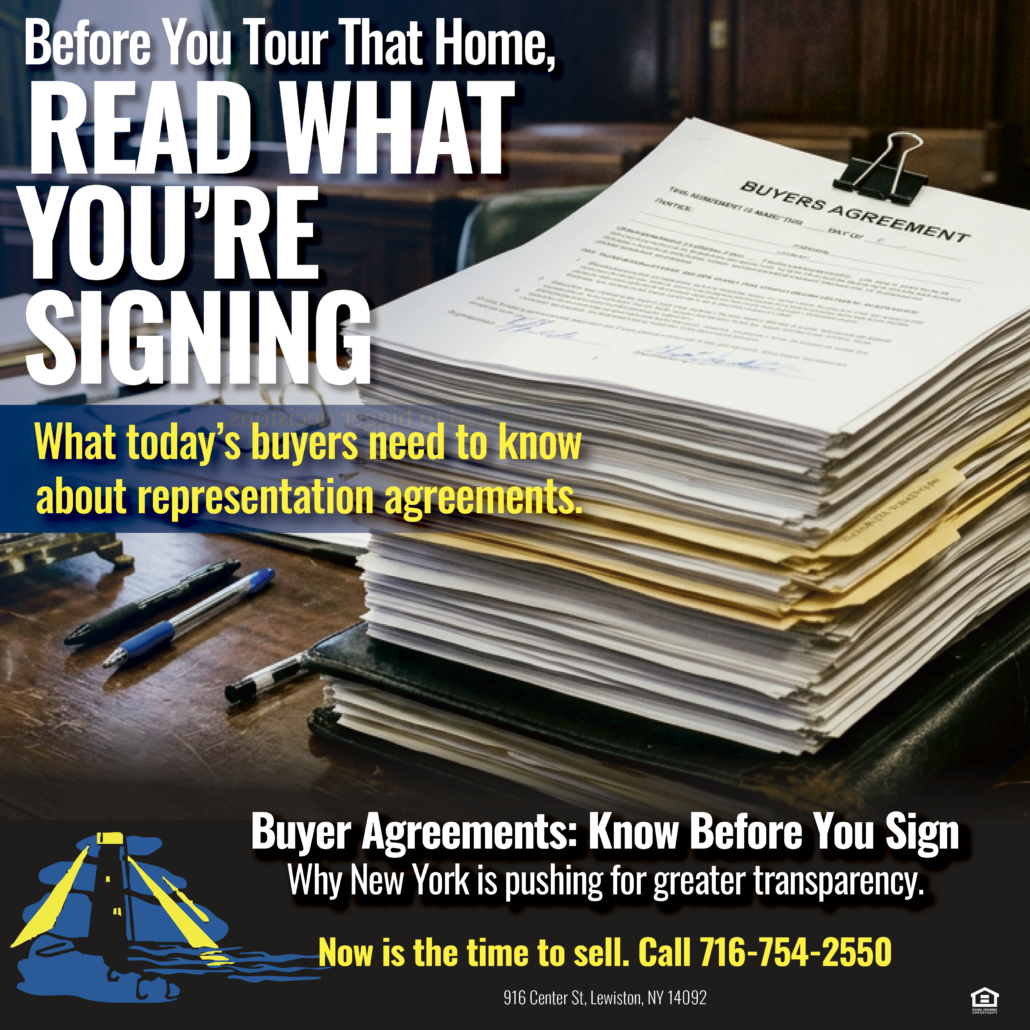
You Signed a Buyer Agreement. But Do You Know What You Agreed To?
Why New York lawmakers are considering greater transparency for homebuyers.
A couple of years ago, many homebuyers could spend weeks touring properties with an agent before anyone mentioned signing a formal agreement. The relationship often developed naturally: you met an agent, looked at homes together, and somewhere along the way that agent became “your agent.”
Real estate has changed.
Since the industry-wide practice changes that took effect in August 2024, many real estate professionals participating in an MLS are required to have a written agreement with a buyer before touring a home together. The idea is straightforward: buyers should understand the services they’re receiving and how their agent will be compensated before that professional relationship begins.
Two years later, however, buyer agreements are creating a different conversation.
For many consumers, this is the first time they’ve encountered one. They may be excited about seeing a house that just came on the market, meet an agent for the first time at the property, and suddenly have a contract in front of them before they’ve even walked through the door.
The temptation is understandable: sign it, see the house, and figure out the details later.
But those details matter.
A Buyer Agreement Is More Than Permission to See a House
This may be the biggest misconception surrounding the new process.
A buyer representation agreement can establish an actual contractual relationship between a buyer and a real estate brokerage. Depending on the agreement, it may define what services the agent will provide, how the agent will be compensated, how long the relationship lasts, whether the relationship is exclusive, and what happens if the buyer later wants to work with someone else.
Those aren’t minor details.
NAR’s consumer guidance specifically encourages buyers to understand and negotiate the services, length and compensation before signing. It also notes that agreements can contain conditions governing how they may be changed or terminated.
In other words, signing shouldn’t be viewed as paperwork standing between you and the front door.
It’s the beginning of a professional relationship.
The Length of the Agreement Matters
Imagine meeting an agent for the first time and agreeing to work together for the next year.
Would you knowingly make that commitment after a ten-minute conversation?
Recent national reporting highlighted buyers who said they discovered they had entered a yearlong exclusive agreement after signing documents at their first home tour. When they later wanted to change agents, they learned that leaving the relationship was considerably more complicated than they expected. The agent and brokerage disputed parts of the buyers’ account, but the situation illustrates why understanding the terms before signing matters.
That doesn’t mean long-term agreements are inherently bad, nor does it mean every agreement works the same way. A buyer who has found an agent they trust may be perfectly comfortable establishing a longer relationship.
The important part is knowing that’s what you’re agreeing to.
Compensation Deserves a Conversation Too
Another major change is that buyer-agent compensation is much more visible to the consumer.
Current NAR rules require covered written agreements to clearly state the amount or rate of compensation the agent will receive, or objectively explain how it will be determined. They must also state that broker fees and commissions are not set by law and are fully negotiable.
That doesn’t necessarily mean a buyer will write their agent a check at closing. Depending on the transaction, compensation may be negotiated from the seller or another source. But the buyer should understand what they’ve agreed their agent will be paid and what could happen if the amount available from another source doesn’t cover that obligation.
That’s a conversation worth having before the home search begins—not after an offer has been accepted.
New York Lawmakers Are Taking Notice
This is where the story becomes especially relevant for Western New York buyers.
New York Senate Bill S9564 would establish statewide requirements for buyer-broker agreements. As of now, it remains proposed legislation, not law.
If enacted in its current form, the legislation would require agreements to clearly address several important pieces of the relationship, including the length of the agreement, the type of agency relationship, compensation and when it is earned and due. It would also require a clear disclosure that compensation is not set by law and is fully negotiable.
Perhaps most interestingly, the proposed law would require disclosure of how long a broker might retain a claim for compensation after an agreement expires.
That’s exactly the kind of provision an inexperienced buyer may never think to ask about.
The proposal’s stated purpose is greater upfront disclosure and transparency for New York homebuyers.
Transparency Is Good for Buyers — and Good Agents
None of this should make buyers afraid of representation agreements.
Quite the opposite.
A good agreement can establish expectations before hundreds of thousands of dollars are on the line. Buyers know what their agent will do for them, agents know what their responsibilities are, and both sides understand the financial arrangement.
But a signature isn’t a substitute for a conversation.
Before signing, buyers should feel comfortable asking how long the agreement lasts, whether it’s exclusive, how compensation works, what services are included and what happens if the relationship simply isn’t working.
A professional who’s asking for your commitment should be comfortable explaining exactly what that commitment means.
The Bottom Line
The homebuying process has changed considerably in just a few years, and buyer representation agreements are now part of that new landscape.
The next evolution may be making those agreements even clearer.
New York lawmakers are considering additional requirements aimed at ensuring buyers understand the relationship they’re entering before services begin. Whether or not the legislation ultimately becomes law, its underlying message is useful today: know what you’re signing.
At Great Lakes Real Estate, we believe representation should begin with clarity. Before touring homes, buyers should understand who is representing them, what that professional will do, how compensation works and what they’re committing to in return.
Because the first important decision in your home search may not be which house to buy.
It may be who you choose to help you buy it.
Call (716) 754-2550 – Let’s start the conversation before we start the search.

