
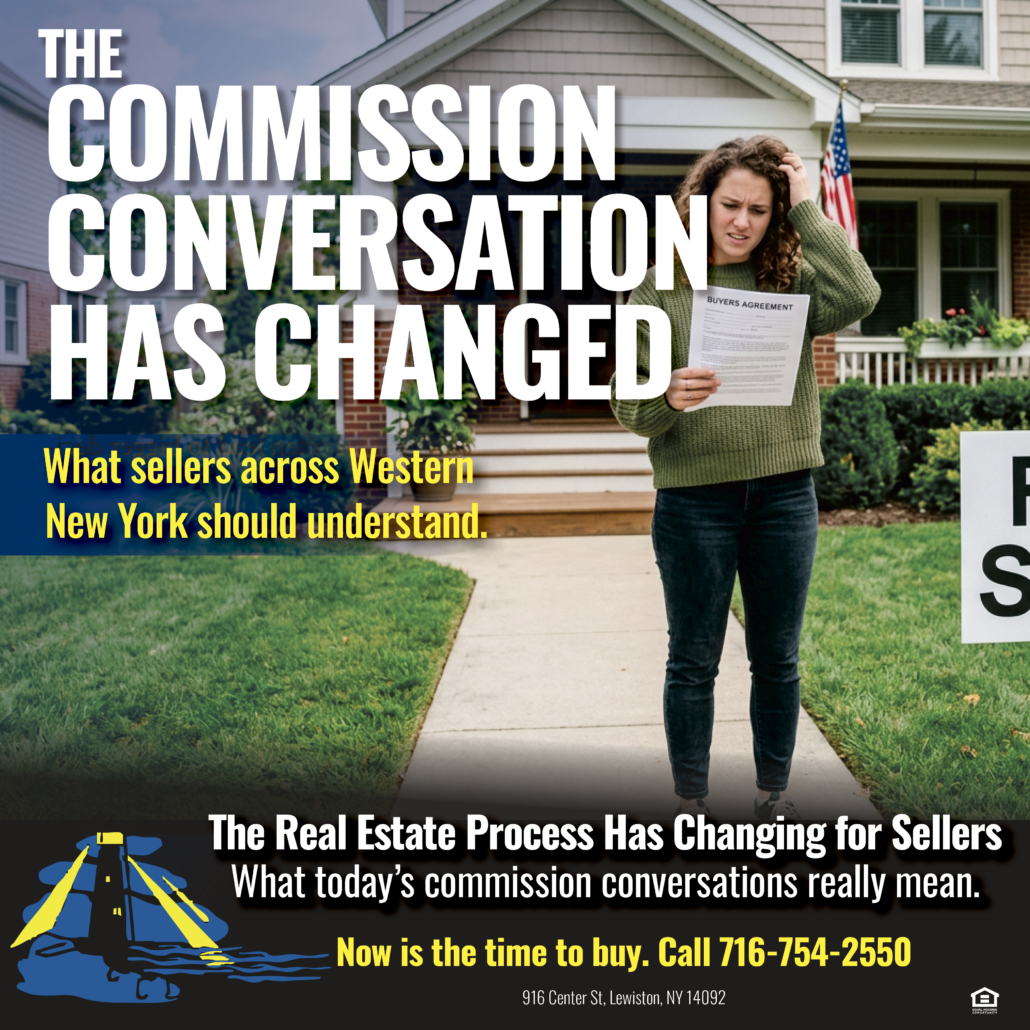
What Sellers Need to Know About Buyer Agent Compensation in 2026
One of the biggest changes happening in real estate right now is not something most sellers can see during a showing or while reviewing offers. It is happening behind the scenes, in the way buyer representation and compensation are being discussed throughout the transaction process.
In our recent blog, we talked about why buyers are increasingly being asked to sign representation agreements earlier in the home search process. For many buyers, that conversation felt unfamiliar and raised questions about how representation now works.
What many sellers do not realize is that those same industry changes are affecting them as well.
Across Western New York and throughout the country, commission conversations are becoming more transparent, more visible, and in some cases more negotiable than they were in the past. As a result, sellers are beginning to encounter questions and scenarios that may not have come up a few years ago.
Understanding those changes is becoming an important part of preparing to sell.
Why These Conversations Are Changing
Historically, many sellers simply viewed commission as part of the standard transaction process. Compensation structures were often discussed generally, but not always in detail from the consumer perspective.
Following the National Association of Realtors settlement discussions and the broader push toward increased transparency in the industry, the way commissions are communicated is evolving.
Buyers are now having more direct conversations with their agents about representation and compensation. At the same time, sellers are becoming more aware of how buyer agents may or may not be compensated within a transaction.
That shift is making commission discussions more visible than they have traditionally been.
What Sellers Are Starting to Notice
One of the biggest misconceptions sellers have right now is assuming the process has completely changed overnight. In reality, many transactions still function similarly to how they did previously.
The difference is that expectations and negotiations are now being discussed more openly.
Sellers may begin hearing:
- questions about buyer agent compensation
- requests tied to concessions or credits
- discussions about what is being offered within the transaction structure
For some sellers, this creates uncertainty because they are hearing conflicting information online, from friends, or through headlines that oversimplify what is actually happening in the market.
What Has Not Changed
Despite the headlines surrounding industry changes, one thing remains true: buyers still value representation, and experienced agents continue playing an important role in helping transactions move successfully from contract to closing.
Well-qualified buyers are still working with agents to:
- evaluate pricing
- understand market conditions
- negotiate terms
- manage inspections and contracts
- navigate the overall process
That means representation itself is not disappearing. The industry is simply becoming more transparent about how those relationships are structured and discussed.
Why This Matters for Sellers
For sellers, these changes reinforce the importance of strategy and communication from the beginning of the listing process.
Understanding how compensation is being presented, how buyer expectations may differ from previous years, and how offers are being structured can all affect negotiations once a property hits the market.
In some cases, sellers may benefit from being flexible and informed rather than relying on outdated assumptions about how transactions “always worked.”
At the same time, sellers should avoid reacting emotionally to headlines or assuming every transaction will suddenly become dramatically different. In Western New York, many deals are still moving forward successfully with strong buyer activity and professional cooperation between agents.
Why Local Market Knowledge Matters More Now
One of the challenges with national real estate headlines is that they often fail to reflect what is actually happening locally.
Markets like Buffalo, Amherst, Williamsville, Erie County, and Niagara County continue to operate differently than many larger metropolitan areas. Buyer behavior, competition levels, and negotiation trends are influenced heavily by local inventory, affordability, and demand.
That is why understanding how these industry changes apply specifically to Western New York matters more than simply following national narratives.
How Great Lakes Real Estate Helps Sellers Navigate These Changes
At Great Lakes Real Estate, the goal is to make sure sellers understand not only what is happening in the market, but why it is happening.
That includes helping clients navigate evolving conversations around buyer representation, compensation structures, negotiations, and market positioning. As the industry adjusts to greater transparency, having clear communication and realistic expectations becomes even more important.
The process may be evolving, but informed strategy continues to matter just as much as ever.
The Bottom Line
The conversations surrounding buyer agent compensation are becoming more visible, and sellers are beginning to feel the effects of those changes as the market evolves.
That does not mean the real estate process has been completely rewritten. It means buyers, sellers, and agents are entering transactions with more transparency and more discussion around how representation works.
For sellers across Western New York, understanding those changes early can help avoid confusion later and create a smoother, more confident transaction experience.
Call (716) 754-2550, let’s talk about what today’s changing market means for your sale.

