
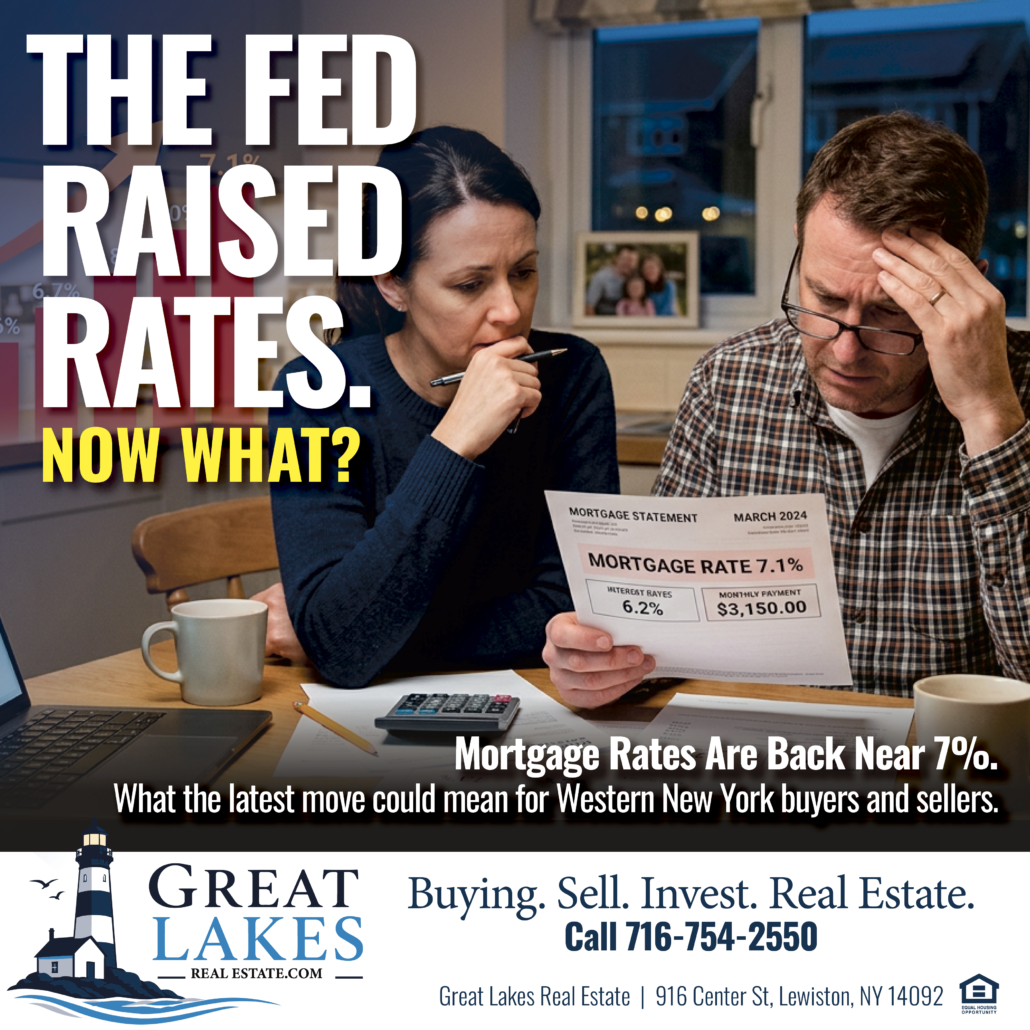
The Fed Just Raised Rates. What Does That Mean for the Fall Housing Market?
Mortgage rates are back near 7%, but buyers and sellers may need to adjust their strategy—not abandon their plans.
If you’ve paid attention to financial news over the past week, you’ve probably heard the headline: the Federal Reserve raised interest rates.
On September 16, the Fed increased its target federal funds rate by a quarter percentage point, bringing the range to 3.75% to 4.00%. It was the first increase in three years, and the Fed pointed directly to inflation that remains above its 2% goal as a reason for the move. At the same time, Fed officials described economic activity as expanding at a solid pace, with resilient consumer spending and relatively stable unemployment.
For anyone thinking about buying or selling a home, however, the immediate question was much simpler.
What does this mean for mortgage rates?
The answer is a little more complicated than the headlines make it sound.
First, the Fed Doesn’t Set Your Mortgage Rate
This is probably the most important distinction to understand.
When the Federal Reserve says it “raised rates,” it is changing the federal funds rate—a very short-term interest rate that influences borrowing costs throughout the economy.
A 30-year mortgage is different.
Mortgage rates are influenced heavily by the bond market, particularly longer-term Treasury yields and mortgage-backed securities. Expectations about inflation, economic growth, future Fed policy and global events all affect those markets. That’s why mortgage rates can rise before the Fed raises rates, fall after a Fed increase or sometimes move very little on the day of an announcement.
We actually saw that happen this time.
Freddie Mac’s weekly survey put the average 30-year fixed mortgage at 6.95% on September 17, up from 6.76% the previous week and 6.26% one year earlier. But immediately following the Fed announcement, mortgage rates didn’t simply jump another quarter point. Mortgage News Daily reported that average rates were essentially back around where they had been Wednesday morning before the Fed decision.
So while Fed policy absolutely matters, “the Fed raised rates by .25%, therefore my mortgage rate just went up .25%” isn’t how it works.
Why Raise Rates Now?
The answer comes back to a word Americans have become very familiar with over the last several years: inflation.
The Fed has a long-run inflation target of 2%. Its latest projections put 2026 PCE inflation at 3.7%, with core PCE inflation projected at 3.4%. That’s still well above the goal.
Higher interest rates are one of the Fed’s primary tools for trying to slow inflation. When borrowing becomes more expensive, consumers and businesses tend to spend and borrow less aggressively. Over time, reduced demand can help relieve pressure on prices.
The challenge is doing that without slowing the economy too much.
Right now, the Fed’s own projections don’t suggest policymakers expect the economy to fall off a cliff. Their September median projections show real GDP growing 2.3% in 2026 and unemployment around 4.1%. But those same projections also show inflation taking time to return toward 2%.
For housing, that creates an uncomfortable combination.
The economy is holding up reasonably well, but borrowing money remains expensive.
For Buyers, Stop Shopping by Purchase Price Alone
If you’re buying a home this fall, this market makes one number particularly important:
the monthly payment.
A $350,000 house isn’t automatically affordable or unaffordable because of the number on the For Sale sign. Your down payment, mortgage rate, property taxes, insurance and loan program all affect what that house costs each month.
That’s particularly important in Western New York, where property taxes can vary considerably between municipalities and school districts.
Instead of starting with “I can spend $400,000,” buyers may be better served by working backward from a monthly housing payment they’re genuinely comfortable carrying.
And talk with your lender.
Ask what different rates do to your payment. Ask whether buying points makes sense in your situation. Understand your options before assuming a headline about the Fed has suddenly priced you out of the market.
Most importantly, be careful about putting your entire home search on hold because you’re waiting for the “perfect” mortgage rate.
Nobody knows exactly when that rate will arrive.
Waiting for Rates to Fall Is Still a Bet
Earlier in the year, buyers had reason to hope borrowing costs might continue improving.
That picture has changed.
Freddie Mac’s 30-year average was 6.95% as of September 17. Fannie Mae’s September housing forecast, which was prepared before the latest Fed decision and therefore deserves some caution, projected the 30-year mortgage rate averaging about 6.8% during the fourth quarter. Realtor.com economists have similarly said they expect rates to remain in the 6% range through the end of 2026, while emphasizing the considerable uncertainty surrounding inflation and geopolitical developments.
In other words, someone waiting for a dramatic drop this fall could be waiting for something current forecasts aren’t promising.
Rates could fall.
They could also rise.
That’s why buying should still begin with whether the house and payment work for you today—not whether you can correctly predict an interest-rate chart six months from now.
If rates eventually improve substantially, refinancing may become an option for some homeowners. The purchase price you agree to, however, doesn’t get refinanced later.
Sellers Need to Adjust Too
Higher borrowing costs aren’t only a buyer problem.
They affect sellers because they change what buyers can comfortably afford.
Imagine a buyer who has established a maximum monthly housing budget. When mortgage rates rise, the amount they can borrow while staying within that budget can shrink.
That doesn’t mean Western New York sellers suddenly need to slash their prices. It does mean pricing correctly from the beginning becomes even more important.
We’ve written before about how the first week of a listing can shape the rest of the sale. That matters even more when buyers are carefully calculating payments.
A home that’s significantly overpriced may not simply look expensive anymore. It may fall completely outside a buyer’s comfortable monthly budget.
Sellers should also remember that negotiation doesn’t have to revolve exclusively around purchase price. Depending on the transaction, closing costs, seller concessions, repairs, closing dates and other terms can become part of creating an agreement that works for both sides.
This is a market where creativity and good advice can matter.
Fall Could Create an Interesting Opportunity
Here’s where the story gets more complicated.
Higher rates can make buying more expensive, but fall traditionally changes some of the other forces working against buyers.
Competition tends to ease. Homes often remain available longer. Some sellers become more willing to negotiate as the holidays and winter approach.
Realtor.com’s 2026 analysis actually identifies the week of September 27 through October 3 as the best week nationally for buyers based on its combination of inventory, competition, pricing and market pace. Its research also notes an important regional difference: inventory in the Northeast remains far below pre-pandemic levels, so the national picture shouldn’t automatically be applied to Western New York.
That distinction matters.
Western New York has spent years operating with relatively constrained housing supply. Our fall market may slow seasonally, but desirable homes in desirable neighborhoods can still attract significant interest.
The difference is that the buyer who remains active in October may face fewer casual shoppers than the buyer who entered the market in May.
Higher rates can hurt affordability while simultaneously reducing some competition.
Both things can be true.
So What Should We Expect This Fall and Winter?
Anyone claiming to know exactly where mortgage rates will be in December is guessing.
The most reasonable expectation based on current information is that affordability will remain challenging and mortgage rates may remain elevated and volatile rather than suddenly returning to the low levels buyers became accustomed to several years ago. The Fed’s September projections also show policymakers themselves expecting monetary policy to remain relatively restrictive while inflation works its way lower.
At the same time, fall and winter naturally bring fewer buyers and fewer new listings.
That could create an interesting market in Western New York.
Buyers who stay active may find sellers who are more willing to have a conversation. Sellers may encounter fewer showings but a higher percentage of people who are genuinely motivated to move. Well-priced, well-presented homes can still stand out, while listings that start too high may have a harder time overcoming today’s monthly-payment math.
In other words, this probably isn’t a market where buyers or sellers should panic.
It is a market where both sides need to be realistic.
Don’t Let One Number Make the Decision for You
Mortgage rates matter. At nearly 7%, pretending otherwise would be ridiculous.
But they’re still only one part of a much larger decision.
Buyers have to consider the home price, taxes, down payment, insurance, monthly payment, how long they expect to stay and what alternatives they have if they don’t buy.
Sellers need to consider current competition, their home’s condition, pricing, their own next move and how today’s financing environment affects the people walking through their door.
The Fed’s latest move is another reminder that the housing market can change quickly.
Your strategy should be able to change with it.
At Great Lakes Real Estate, we don’t believe buyers should rush into a home because someone tells them rates are going higher, and we don’t believe they should automatically sit on the sidelines waiting for rates to fall. The same goes for sellers trying to time the “perfect” market.
The better approach is understanding today’s numbers, your own situation and what is actually happening in the Western New York market before making the decision.
Thinking about buying or selling this fall? Call Great Lakes Real Estate at (716) 754-2550 and let our local team help you build a strategy around today’s market—not yesterday’s.

