
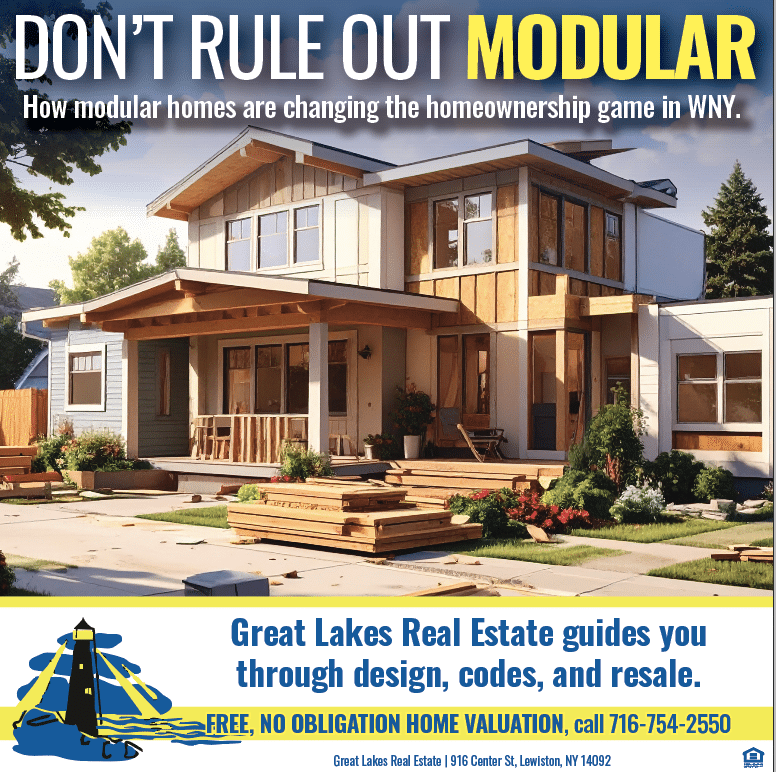
What Is a Modular Home? Pros, Cons, and How It Compares to Traditional Construction
You’ve probably seen “modular homes” advertised or noticed signs along the road. They promise fast builds and modern design—but what exactly is a modular home, and how do they stack up versus a conventional house? Whether you’re considering buying new, used, or building one, here’s what you need to know—especially if you’re in Western New York.
What Exactly Is a Modular Home?
A modular home is built in sections (modules) in a factory under controlled conditions, then transported to your site and assembled on a permanent foundation. Unlike manufactured or mobile homes, modular homes must comply with local building codes, use durable materials, and meet the same structural standards as site-built homes.
Pros of Modular Homes
Modular homes have some major advantages. The most obvious is speed—because the modules are built in a factory while your site is being prepared, construction is often much faster than traditional homebuilding, which can be delayed by weather or contractor schedules. The controlled factory setting also allows for better quality control, ensuring materials stay dry and precise measurements are met.
Another big benefit is energy efficiency. Modular homes often feature tighter seams and modern insulation, which can help lower heating and cooling costs—an especially nice perk during a Buffalo winter. Costs are also appealing: modular homes generally come in at 10–20% less per square foot than custom stick-built homes. And don’t let the term “modular” fool you—these homes are durable and built to last just as long as a conventional house when properly constructed and maintained.
Cons & Things to Watch Out For
That said, modular homes aren’t for everyone. While they offer some customization, you may find yourself limited compared to a fully custom build. Unique architectural features or layouts might be harder (or more expensive) to achieve. Transportation and site prep costs can also add up quickly—especially if your property is far from the factory or requires a challenging foundation.
Financing can be another hurdle. While more lenders are familiar with modular builds today, some still have stricter requirements or additional steps in the process. And although perceptions are changing, some buyers still view modular homes as “less than” traditional homes, which can affect resale appeal in certain neighborhoods.
Buying New vs. Used vs. Traditional Construction
If you’re building new, modular homes are usually completed much faster than traditional homes and often at a lower cost. Buying a used modular home has many of the same advantages, but the quality will depend on how well it was originally built and maintained—just like any resale property. Traditional stick-built homes still offer the most freedom for full customization, but that flexibility usually comes with a longer timeline and higher price tag.
Is a Modular Home “Good Enough”?
For many Western New York buyers, a modular home is not just “good enough”—it’s a smart choice. The speed of construction, potential cost savings, and improved energy efficiency make them attractive, particularly if you want to move quickly or stay on budget. The key is doing your homework: ask about insulation and energy ratings, confirm the modules meet local building codes, and don’t forget to factor in land cost, site prep, and utilities when budgeting.
How Great Lakes Real Estate Can Help You with Modular Homes
You might think a real estate agent’s job ends when you buy—but with modular homes, having an expert on your side is more important than ever.
Great Lakes Real Estate can help you find modular-friendly land in Erie or Niagara counties, connect you with trusted builders, and walk you through the permitting process to make sure everything complies with New York State codes. We can also run cost comparisons between modular and traditional builds, so you know exactly what you’re getting into. When it comes time to sell, we’ll help position your home in the market to maximize its value.
Modular homes aren’t a one-size-fits-all solution, but they are a serious option for many buyers—especially in a market where costs, labor shortages, and timelines can be unpredictable. With the right guidance, you can get a home that looks, feels, and performs just as well as a traditional build—often with savings and speed on your side.
Thinking about exploring modular homes? Call Great Lakes Real Estate at (716) 754-2550 and let’s find out if a modular build is right for you.

